
By: Dr. Pranab Kr. Das, Assistant Professor, Department of Geography, Sree Chaitanya College, Habra
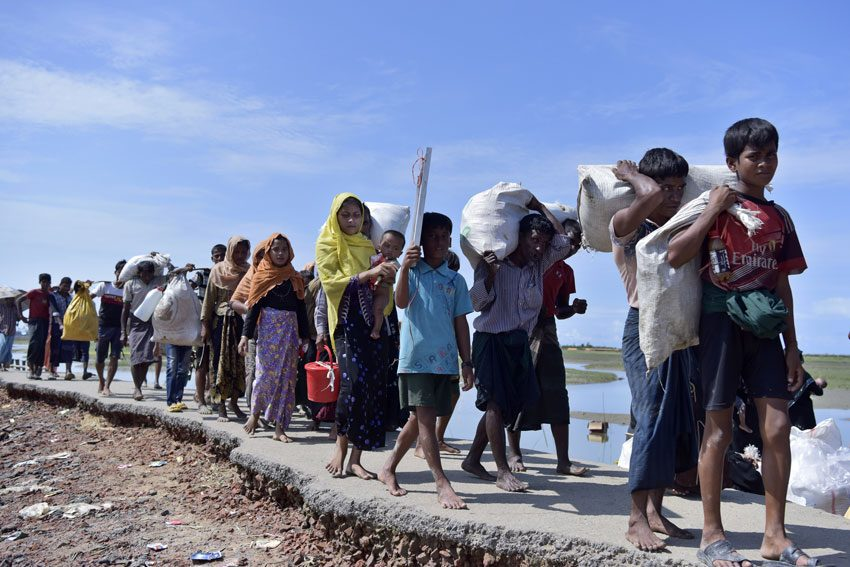
Photo Curtsey: Sk Hasan Ali / Shutterstock
Introduction:
Cross-border infiltration refers to the illegal and unauthorized movement of individuals or groups from one country to another. This term is often associated with the covert entry of militants, terrorists, or insurgents from one country into another. The infiltrators typically aim to operate covertly within the targeted country, engaging in activities that may range from acts of terrorism to insurgency. Cross-border infiltration poses significant security challenges for the affected nations, and it is often a source of tension and conflict between neighbouring countries. In the context of India, for example, cross-border infiltration is frequently discussed as a security concern along the borders with Pakistan. While the term ‘cross-border infiltration’ typically carries a negative connotation related to security concerns, it’s important to note that there are instances where people may cross borders in search of better economic conditions. This movement is often driven by economic factors such as job opportunities, higher wages, or improved living standards. This is also called illegal migration. In this discussion, we shall concentrate on the second issue.
According to the Citizenship Act amended in 2003, an illegal immigrant in India is defined as a foreigner who has entered the country without valid documents or who initially possessed valid documentation but has overstayed beyond the permitted duration. Such individuals are not entitled to citizenship through registration or naturalization and may face imprisonment for 2–8 years, along with fines. However, an exception was introduced in 2015 for minority communities from Bangladesh, Pakistan, and Afghanistan, who sought refuge in India due to religious persecution or the fear of it. These individuals are not categorized as illegal migrants and retain eligibility for citizenship. The Indian Census of 2001 provides information about migrants, though not exclusively focusing on illegal immigrants. According to the 2001 Census, the largest group of migrants in India comprises Bangladeshis, followed by Pakistanis.
Different Legal Aspects Related to Indian Citizenship, Immigration and Infiltration In India:
The Citizenship Act, 1955, (Articles 5 to 11, Part II of the Constitution of India) regulates Indian nationality law and has undergone amendments through the Citizenship (Amendment) Acts of 1986, 1992, 2003, 2005, 2015, and 2019.
- Illegal Immigrants
Illegal immigrants are people who migrate to a country in violation of the immigration laws of that country, or the continued residence of people without the legal right to live in that country. Illegal immigration tends to be financially upward, from poorer to richer countries. Under Indian law, illegal immigrants are not recognized as refugees since India is not a party to the 1951 Refugee Convention. This means that the United Nations principle of non-refoulement, which protects individuals from expulsion if they face persecution, does not apply in India. Whether illegal immigrants face obstacles to expulsion depends on whether they meet the host country’s legal definition of a lawful refugee.
In 2005, the Supreme Court of India rejected the Illegal Migrants (Determination by Tribunal) Act, 1983, stating that it was incapable of identifying and deporting illegal migrants. During a Supreme Court hearing on August 9, 2012, it was clarified that the government of India does not endorse any form of illegal migration into its territory. However, to deport illegal migrants, the government should adopt lawful means.
2. Legal Refugees:
In the past, the government of India acknowledged individuals from Tibet and Sri Lanka (mostly Tamils) as refugees, providing basic facilities including free education. The Citizenship Amendment Act of 2019 brought amendments to the Citizenship Act of 1955, allowing migrants from minority communities such as Hindu, Sikh, Buddhist, Jain, Christian, and Parsi, who fled religious persecution in Afghanistan, Bangladesh, and Pakistan, to qualify for Indian citizenship. This provision applies as long as they entered the country on or before December 31, 2014. Notably, individuals from the Muslim community, which constitutes the majority in those nations, are excluded from this eligibility.
3. Foreigners:
As per the Foreigners Act, of 1946, a person who does not have valid Indian citizenship or a visa is considered as illegal and unlawful immigrant or is not a citizen of India. According to the Foreigners (Amendment) Order, 2015 persons belonging to minority communities (Hindus, Sikhs, Buddhists, Jains, Parsis and Christians) in Bangladesh and Pakistan, who were compelled to seek shelter in India due to religious persecution or fear of the same and entered into India on or before 31 December 2014 with or without valid documents or travel document are granted exemption from the application of provisions of the Foreigners Act, 1946. Where the nationality of a person is not unclear, the responsibility of determining the nationality lies upon this person. The Foreigners Act empowers the Indian administration to detain a person until they are deported back to their country.
4. NRC
The National Register of Citizens of India (NRC) is a registry envisioned by the Government of India to compile names and pertinent details for identifying Indian citizens. Originally prepared based on the 1951 Census of India, the register was not maintained afterwards. The recent update for the state of Assam was conducted under a 2013 order from the Supreme Court of India. Although the Government of India has expressed its intent to create a nationwide NRC, it has not yet been operationalised. Concurrently, certain Border States like Manipur have advocated for the creation of individual NRCs for their respective regions.
Reasons for Illegal Migration in India:
- Political Factors:
i. Political factors have been one of the major reasons for forcing the Bangladeshi Hindus out of the country and into India. The riots of 1964 and the India–Pakistan War of 1965 yet again resulted in the out-migration of large numbers of Hindus from East Pakistan.
ii. Another massive out-migration from East Pakistan was triggered in 1971 when the Pakistani military establishment tried to suppress Bengali nationalism through brutal military force.
iii. The recapture of power by the Taliban in Afghanistan recently ( in 2021) forced a section of Afghan people to come to India including the minorities of Hindus and Sikhs.
2. Religious Discrimination:
i. Due to religious clashes and discrimination a good number of Pakistani minority seek asylum to India in recent times.
ii. In Bangladesh, the already discriminatory land laws were further manipulated by vested interest groups and corrupt administrators to dispossess and alienate the Hindus from their own land and property.
iii. Religion has a particular effect in the case of the Rohingya Crisis. The so-called War on Terror waged primarily against Muslims around the world—has made it easier for Myanmar’s elites to label the Rohingya as terrorists.
Immigrants in India:
- Afghani Immigrants
In 2009, around 13,000 immigrants from Afghanistan were residing in India. As reported by the Afghan embassy in Delhi, an estimated 30,000 families have been residing in Delhi as refugees in recent times due to the civil war in Afghanistan in 2021. Presently, close to 11,000 Afghan refugees are officially registered with the United Nations High Commissioner for Refugees (UNHCR) in India, predominantly residing in Delhi and its adjacent regions. These refugees encounter significant challenges and adversities in their daily lives.
2. Pakistani Immigrants:
In 2010, India had approximately 7,600 illegal immigrants from Pakistan. A significant number of these migrants are religious minorities of Pakistan mostly Hindus and Sikhs who have exceeded their authorized stay, seeking pathways to secure citizenship.
3. Bangladeshi Immigrants:
The Bangladesh Liberation War and subsequent political and economic instability in Bangladesh compelled certain individuals to seek asylum in India. Throughout the war, over 10 million Bangladeshis, with a majority being Hindus, entered India unlawfully to escape widespread atrocities such as rape and genocide. The influx of refugees was particularly significant in the border states, particularly West Bengal and Assam. In response to the persecution, the Assam Accord categorizes illegal migrants as those who entered unlawfully after December 24, 1971.
According to the 2001 census, 3,084,826 people in India illegally migrated from Bangladesh. An estimation of year, 2000 suggested that the total number of illegal Bangladeshi immigrants in India was 15 million, with approximately 300,000 entering the country annually. During the UPA government, on July 14, 2004, Sriprakash Jaiswal, Union Minister of State for Home Affairs, declared in Parliament that “12 million illegal Bangladeshi infiltrators were living in India,” with West Bengal having the highest number at 5.7 million. More recently, Kiren Rijiju, Minister of State for Home Affairs in the NDA government, has indicated a figure of around 20 million. However, reliable statistics on illegal immigrants are currently unavailable. However, various scholars indicate that these estimations are exaggerations and politically motivated. Samir Guha Roy of the Indian Statistical Institute has termed these estimates as “motivated exaggerations.” After scrutinizing population growth and demographic statistics, Roy revealed that, on average, around 91,000 Bangladeshis illegally crossed over to India annually during the years 1981–1991. Even Bangladeshi authority does not recognize the estimation as stated various times in Indian Parliament. But, indeed, people from Bangladesh are still coming to India as illegal immigrants. While many immigrants have settled in border areas of West Bengal, Assam, Tripura and Meghalaya, some have relocated to northern, western, and southern metropolitan cities such as Delhi, Mumbai, Bangalore, Chennai, and Hyderabad for better livelihood.
4. Burmese immigrants and Rohingyas:
An estimated 50,000 to 100,000 illegal immigrants from the Burmese Chin community are reported to be living in India, primarily in the states of Mizoram and Manipur, with a smaller number in Delhi.
In recent times, Rohingya people, who have faced prolonged persecution in Myanmar, have increasingly sought refuge in India. As of 2015, the Union Government reported 10,565 Rohingya families residing in India. In August 2017, the Union Government instructed state governments to initiate deportation procedures for all illegal immigrants, including Rohingyas. Despite facing criticism, the government remained steadfast in its stance. Three Rohingya refugees challenged this decision before the Supreme Court of India. In response, the Government of India submitted an affidavit asserting the presence of over 40,000 “illegal Rohingya immigrants,” primarily located in Assam, West Bengal, and Jammu and Kashmir, claiming that they posed a threat to the security of the state.
Impact of Cross-Border Infiltration in India:
Cross-border infiltration in India has significant and multifaceted impacts, affecting various aspects of the country’s security, socio-economic stability, and diplomatic relations. While India has a secure border with Pakistan, illegal migration is recorded less in the Western sector. However, both sides of the border in the eastern sectors share physical and cultural similarities, and there are several penetration zones along the India–Bangladesh border in Assam and West Bengal. Therefore, cross-border infiltration is a prevalent issue in these regions. Here are some key impacts:
- Smuggling and Women Trafficking:
Apart from immigrants, a substantial number of smugglers regularly cross the border along West Bengal, Assam, Meghalaya, and Tripura into India. They primarily engage in smuggling goods and livestock from India into Bangladesh to avoid the high customs duties imposed by the Bangladesh government on certain Indian goods. Additionally, Bangladeshi women and girls are trafficked to India. In 1998, the Centre for Women and Children Studies estimated that 27,000 Bangladeshis had been forced into prostitution in India. According to the CEDAW report, 1% of all foreign prostitutes in India and 2.7% of prostitutes in Kolkata are from Bangladesh.
2. Security Threats:
The presence of Rohingya adds economic pressure on the Indian people. Due to their involvement in militant activities, they pose a security threat, particularly in sensitive areas such as Jammu and West Bengal. In 2017, the Central Government filed an affidavit in the Supreme Court stating that “Some Rohingyas sympathizing with many militant groups’ ideologies may be active in Jammu, Delhi, Hyderabad, posing a potential threat to internal security.”
3. Demographic Changes:
Demographic change is mostly observed in border districts of Assam and West Bengal due to infiltration from Bangladesh.
This was a crucial political issue in Assam. Following the 1991 census, concerns over changing demographic patterns in border districts of Assam, causing anxiety and tension throughout the nineties. However, distinguishing between illegal Bangladeshis and local Bengali speakers remains challenging, and instances of discrimination against genuine Indian citizens have been reported. Additionally, there are allegations of Bangladeshis obtaining Indian ration and voter identity cards
In West Bengal, another Indian state impacted by the issue of illegal immigration, the situation remained relatively calm during the mentioned period. However, reports in Indian newspapers indicated that the state government acknowledged the presence of illegal Bangladeshi migrants in certain rural areas. While many of these migrants engaged in agriculture, they lacked the necessary documents to establish land ownership.
Following the 2001 census, concerns somewhat subsided as growth rates returned to near-normal levels, particularly in West Bengal. This countered fears of an uncontrolled influx of migrants, though lingering concerns persisted. The proportion of Muslims in West Bengal increased from 19.85% in 1951 to 27.01% in 2011. While this growth is generally attributed to a higher birth rate among Muslims, closer examination of certain CD Blocks along the India-Bangladesh border raises questions.
In specific areas, such as the Basirhat subdivision in North 24 Parganas district and CD Blocks along the riverine international border in Murshidabad district, there were significantly high decadal population growth rates, raising concerns about potential immigration. For instance, the decadal growth rate of the population in Basirhat I CD Block in 2001–2011 was 16.16%, compared to 20.94% in 1991–2001. Similarly, Hasnabad CD Block had a decadal growth rate of 14.50% in 2001–2011, down from 17.47% in 1991–2001. Comparatively, in neighbouring Satkhira District in Bangladesh, the decadal growth rate of the population was 6.50% for the decade 2001–2011, a decline from 16.75% in 1991–2001 and 17.90% in 1981–1991.
In the border areas of Murshidabad district, the decadal growth rates for the decade 2001–2011 remained notably higher. Specifically, Raghunathganj II CD Block recorded a growth rate of 37.82%, the highest among all CD Blocks in Murshidabad district. Other notable growth rates include 34.09% in Samserganj CD Block, 30.82% in Suti II CD Block, 29.02% in Suti I CD Block, 23.62% in Lalgola CD Block, 22.24% in Bhagawangola II CD Block, and 21.65% in Bhagawangola I CD Block. Comparatively, the decadal growth rate of the population in Chapai Nawabganj District was 15.59% for the decade 2001–2011, a decrease from 21.67% in the decade 1991–2001. In the Rajshahi District, situated across the Ganges in Bangladesh, the decadal growth rate of the population was 13.48% for the decade 2001–2011, down from 21.19% in the decade 1991–2001. These figures highlight the contrasting demographic trends between the border areas of Murshidabad district and the neighbouring districts across the Ganges in Bangladesh.
4. Political Instability:
In Assam, the anti-illegal immigration movement, known as the Assam Movement, began in 1979 and concluded in 1985 under the leadership of the All Assam Students Union. Lasting six years, the movement aimed for an “Infiltration Free Assam” with 860 individuals sacrificing their lives. The protesters called for an end to immigration influx and the deportation of those already settled. The movement turned violent, sparking ethnic clashes between Assamese and Bengalis, primarily Muslims, leading to the infamous Nellie massacre in 1983 amid a controversy over the 1983 election. The Indian Government responded by signing the Assam Accord in 1985 with protest leaders to address the issue. As part of the accord, India initiated the construction of a fence along the Assam-Bangladesh border, which is now nearly complete.. In 1998, the Assam state government ordered the construction of the Indo-Bangladesh barrier to curb migration and illegal trade along the border. The plan aimed to reinforce the existing barrier in Assam and extend its coverage to West Bengal, Tripura, and Mizoram. In recent times this was also a burning political issue during the 2021 state election in West Bengal.
5. Disturbance in Law and Order: The rule of law and integrity of the country are undermined by the illegal migrants who are engaged in illegal and anti-national activities, such as entering the country clandestinely, fraudulently acquiring identity cards, exercising voting rights in India and resorting to trans-border smuggling and other crimes.
6. Rise of Militancy: The persistent attacks against the Muslims perceived as illegal migrants in Assam have given way to radicalisation within certain sections of the Muslim community with the formation of militant organisations, such as the Muslim United Liberation Tigers of Assam (MULTA).
Bibliography:
- Registrar General and Census Commissioner of India. (2018, December 20). “Census of India 2011: Provisional Totals for West Bengal”.
- Directorate of Census Operations, West Bengal. (2011). “District Census Handbook: North 24 Parganas, Series 20 Part XII A” (PDF). Brief Analysis of Inset Tables based on Primary Census Abstract 2011 (Inset Tables 1-35), Table I: Decadal change in population of Tahsils (Sub-district) by Residence, 2001-2011, Page 52.
- Directorate of Census Operations, West Bengal. (2011). “District Statistical Handbook: North 24 Parganas 2010-2011; Table 2.4A: Distribution of Rural and Urban Population by Sex in the district of North 24 Parganas, 1991; Table 2.4B: Distribution of Rural and Urban Population by Sex in the district of North 24 Parganas, 2001”.
- Directorate of Census Operations, West Bengal. (2011). “District Statistical Handbook: North 24 Parganas 2010-2011; Table 2.4A: Distribution of Rural and Urban Population by Sex in the district of North 24 Parganas, 1991; Table 2.4B: Distribution of Rural and Urban Population by Sex in the district of North 24 Parganas, 2001”.
- Bangladesh Bureau of Statistics (BBS). (2018, December 20). “Bangladesh Population and Housing Census 2011: Zila Report – Satkhira” (PDF). Page 17: Table PT 02 Population and Growth Rate, 1974-2011.
- Directorate of Census Operations, West Bengal. (2011). “District Census Handbook: Murshidabad, Series 20 Part XII A” (PDF). Brief Analysis of Inset Tables based on Primary Census Abstract 2011 (Inset Tables 1-35), Table I: Decadal change in population of Tahsils (Sub-district) by Residence, 2001-2011.
- Bangladesh Bureau of Statistics (BBS). (2018, December 20). “Bangladesh Population and Housing Census 2011: Zila Report – Chapai Nawabganj” (PDF). Page 17: Table PT 02 Population and Growth Rate, 1974-2011.
- Bangladesh Bureau of Statistics (BBS). (2018, December 20). “Bangladesh Population and Housing Census 2011: Zila Report – Rajshahi” (PDF). Page 17: Table PT 02 Population and Growth Rate, 1974-2011.
- Business Standard India. (2019, October 2). “WHAT IS NRC”.
- The Telegraph. (2018, August 20). “Couple who set NRC ball rolling”. Archived from the original on August 1, 2018.
- Seetharaman, G. (2015, June 14). “National Register of Citizens in Assam: Issue of illegal foreigners continues to be a major political one”. The Economic Times.
- Seetharaman, G. (2015, June 14). “National Register of Citizens in Assam: Issue of illegal foreigners continues to be a major political one – The Economic Times”.
- Hindustan Times. (2019, September 16). “Rohingyas, Bangladeshi refugees likely target of Khattar govt’s updated NRC”.
- News Click. (2019, October 1). “UP DGP Asks Top Cops to Start Identifying Illegal ‘Bangladeshi and Foreigner’ Immigrants”.
- Zaman, Rokibuz (2022, July 29). “How the Myanmar political crisis has triggered fresh demands for an NRC in Manipur”. Scroll.in.
- The Wire. (2017, February 7). “In Strident Campaign, Jammu Politicians Target Rohingya Muslim Refugees”.
- Supreme Court Observer. (2018, February 19). “ROHINGYA DEPORTATION CASE: DAY 3 ARGUMENTS
 Geo-Synthesis