
By: Dr. Pranab Kr. Das, Assistant Professor, Department of Geography, Sree Chaitanya College, Habra
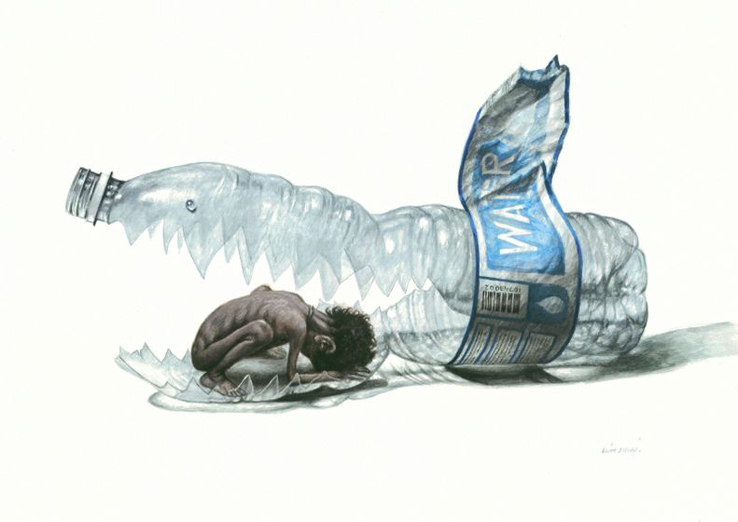
Photo Courtesy: Agim Sulaj
Introduction:
Without water, life on Earth and humans would not have emerged. Life on Earth first evolved in water. Water sustains every cell. 60 % to 70 % of water is found in all living beings, including human bodies. If there is a shortage of water for any reason, life cannot survive. Despite the abundance of water in the world, people in various parts of the world face water scarcity – the situation has become almost inevitable. Water scarcity presents a critical global challenge, marked by a disparity between the demand for water and its supply. It arises when there’s an inadequate amount of freshwater to fulfil the requirements of communities, industries, and ecosystems. This scarcity is intensified by various factors including population growth, urbanization, climate change, pollution, and ineffective water management practices.
Mode and Occurrence of Water:
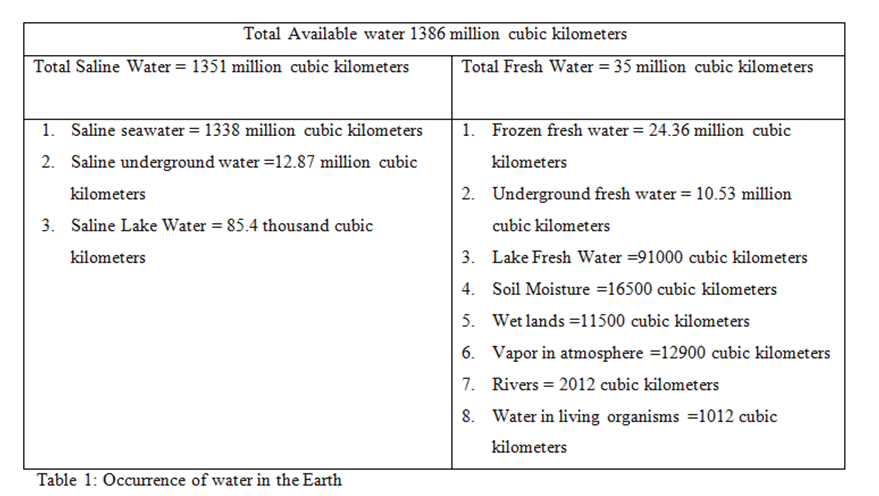
It cannot be said that there is a scarcity of water on the Earth’s surface as 29% is land, and the remaining 71% is water. The total amount of water on Earth is approximately 1386 million cubic kilometres. However, the majority (1338 million cubic kilometres) of this water is saline seawater, which is not suitable for human consumption and use. Apart from this, there are about 12.87 million cubic kilometres of saline in the underground and 85.4 thousand cubic kilometres in lakes. The water which is not salty, called freshwater, is only 2.5 % of the total water, i.e., 35.03 million cubic kilometres. 70% of freshwater is frozen and found in the Polar Regions, Greenland, and mountain peaks. Almost all of the remaining fresh water is underground, hidden in soil-rock-sand layers. Only 0.3% of the Earth’s freshwater – about 100 thousand cubic kilometres – is found in wetlands, ponds, canals, lakes, rivers, and streams. In addition, there are about 13 thousand cubic kilometres of water in the atmosphere, in the form of water vapour and clouds. And about 1,000 cubic kilometres of water are accumulated in the cells of living organisms.
Importance of Water Cycle:
The vast seas and oceans evaporate due to solar radiation, and the water vapour enters the atmosphere, carried by the wind. It becomes condensed into clouds and finally comes down again as fresh water in the rain. Evaporation from the ground is not only caused by the heat of the sun but also by the action of plants (evaporation). All small plants absorb water from the soil and store it in their bodies; much of it evaporates and mixes with the air through transpiration. Every day, on average, about 1,500 cubic kilometres of water evaporate into the sky (one-tenth of which comes from plants), and an equal amount falls as rain or snow. Most of the rain, however, falls into the ocean and mixes with saltwater. Whatever falls on the ground, people, animals, birds, and plants depend on it.
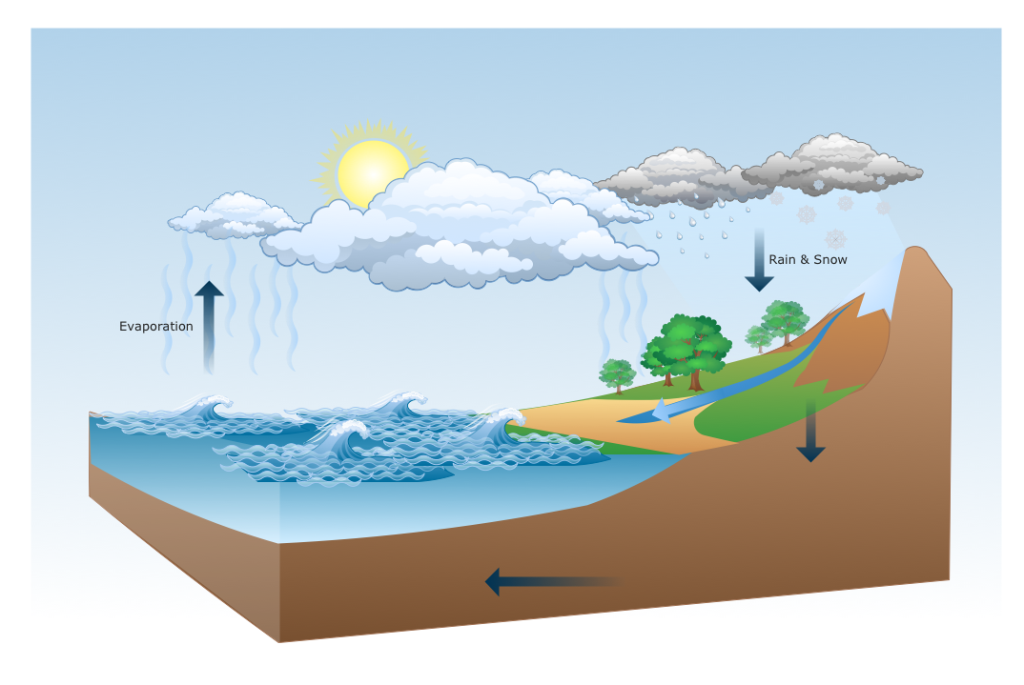
When water falls on the soil, a portion of it gets absorbed as soil moisture. This starts a slow downward journey for the water. It doesn’t only sink straight down; it also moist the soil. In wet soil, gravity pulls water downward, but dry soil can also pull it up. When trees take soil water and the sun dries out the soil surface, the water deep in the ground (capillary water) gets pulled upward more strongly. This tension stops the water from going too far down. Saltwater from the sea also seeps into the groundwater in coastal regions. So, more than half of the underground water on Earth is salty.
Socio-Economic Impacts of Water Scarcity:
- Inadequacy of Drinking water
Surface water is the most readily available. So, wherever this water is abundant, people have settled in those places for ages. They’ve also dug wells and used underground water to meet their needs. But water isn’t unlimited. If we use up rainwater faster than it’s replenished each year, rivers, lakes, and underground water will slowly disappear. People in drought-prone regions have experienced this and have realized it through hardships. In areas where water scarcity is not yet acute, many people do not have a clear understanding of the scarcity. Only people from the areas facing water scarcity can truly realize this problem. At the end of the 20th century, it was found that 1.1 billion people around the world live in such places where they have to travel more than a kilometre to collect drinking water.
It is not just about Africa or Rajasthan. In West Bengal too, one in five rural households is more than half a kilometre away from a draining water source. In Bankura, Purulia, south 24 Parganas and Darjeeling districts one in every three rural houses falls under this stage. They also have to work hard to collect the daily drinking water. Simply having a water tap nearby isn’t sufficient; there are often long queues. While water sources are accessible to 90 % of Dhaka city’s population, this includes slum areas where an average of 500 people rely on a single tap. Enduring endless waits with a bucket in hand is a daily reality there.
2. Public Health Issues
But the long queues of slum dwellers in front of taps, or the long walks of women in the countryside are not the only problems. During dry or lean periods, these people often don’t have a choice of quality water. They consume untreated or contaminated water and reduce water usage for bathing, toilets, and personal hygiene. Most of those who have to walk more than a kilometre for drinking water do not access more than five litres of water a day. This amount is not even a fraction of the standard recommended by the World Health Organization. In this situation, waterborne diseases are likely to spread. Every year, more than fifty million people die from these diseases worldwide.
This number is more than ten times the number of people who die in wars. On average, 18 million children under the age of five die from diarrhoea alone worldwide. Many of the children who survive the disease carry the burden of childhood illnesses throughout their lives – stunting, physical weakness, susceptibility to diseases, etc. are their constant companions. Some waterborne diseases cause physical disabilities, such as trachoma, which can lead to blindness. Trachoma is an eye disease caused by infection with the bacterium Chlamydia trachomatis. In 2021, 125 million people lived in trachoma-endemic areas and were at risk of trachoma blindness, while 1.9 million people lost their vision (WHO, Fact Sheet, 2022).
Contamination of drinking water isn’t solely pathogenic. Approximately 60 million people worldwide are exposed to arsenic contamination from drinking water, with half of them residing in Bangladesh. Arsenic poisoning can lead to skin diseases and certain types of cancer. Additionally, fluorosis (a tooth and bone disease) from fluoride in drinking water is widespread in twenty-five countries across Africa and Asia, with India and Pakistan included in this list. Millions of people are affected by fluoride pollution (UNDP, 2006). It is not that there is no prevention or remedy for all these pollutions, but it is not always possible. In many cases, the effects of such pollution cannot be realized overnight; it takes some time to manifest. In regions where water scarcity is severe, concern about the long-term effects of such pollution never gets priority. However, individual illness or disease not only entails personal suffering but also creates economic stress and misery for their families.
3. Impact on Food Production:
There is a connection between water and food production. For centuries, people have lived with the fear that droughts in monsoon-dependent countries could lead to crop damage—and even famine. There have been new reasons to increase this fear in recent times. After the Green Revolution, agriculture has become more dependent on water than before. On the other hand, there have been many claimants to that water. About forty kilograms of paper can be produced with the same amount of water it takes to produce one kilogram of rice. Profits in industry are high, so industrial demanders can pay high prices for water. Urban elites can also pay high prices for water for their daily needs. There will be high water demand for the cultivation of cash crops. Not only tobacco, cotton, biodiesel, etc., but crops such as potato for potato chips and mung dal for bhujia can also be put in this category, as the buyers of these products will be ready to pay more if necessary. To keep up with all these demands, the supply of water for the production of common food grains will decrease, and the price of that water will also be high. As a result, the cost of many common foods will gradually go beyond the reach of poor people.
4. Environmental Degradation:
Another danger of water scarcity is environmental degradation. The water cycle is essential for the distribution and redistribution of water. Scarcity of water could decelerate the water cycle and water can trap in a specific geographical location. In a river basin precipitation, evaporation, run-off, and infiltration play a crucial role in the environment. In times of scarcity, much of the river’s water is diverted from its natural course into reservoirs or canals. This disrupts the environmental balance of the area.
The water balance in the environment is being disturbed due to global warming. Throughout the 20th century, the average global temperature rose by about 0.6 degrees Celsius. It is believed that one of the major reasons for this is pollution caused by human activities. The climate is changing dramatically. A significant portion of Africa’s Lake Chad, and Aral Sea have dried up in just forty years. The Himalayan glaciers are shrinking rapidly. The amount of water stored in those glaciers is close to the total snowfall of a year (CNN, 2009). Many rivers originating in the Himalayas survive in the dry season only due to the ice-fed waters of glaciers. If there were no glaciers, these rivers would dry up. Additionally, there are indications of an increased number of tropical cyclones and floods in the monsoon season due to climate change, leading to significant surface runoff. It appears that uncertainty about water will increase alongside scarcity in the coming days.
Cause of Water Scarcity:
- Rapid Population Growth
A major reason for water scarcity is population pressure. By 2023, the world’s population exceeded 8 billion. Every person requires water every day, but individual needs vary. For instance, people in Phoenix, America, require about 1000 litres per day, while those in Mozambique, Africa, consume an average of 10 litres per day. According to international standards proposed by the World Health Organization and the United Nations Children’s Fund (UNICEF), every person needs to be able to collect at least 20 litres of water per day from a distance of less than one kilometre from their residence for drinking and health protection. Considering the additional need for bathing and washing clothes, this minimum requirement is about 50 litres per day (UNDP, 2006). In Bangladesh, people can use an average of 48 liters of water for daily needs, while in India; this calculation is 139 liters (UNDP, 2006). However, the average calculation does not show the complete picture. A large proportion of the global population (one in five) can’t access even the minimum amount of water they need. During dry seasons, these people are severely affected by drought. Therefore, the water crisis will worsen in the coming years. By 2050, the world’s population will likely be close to 9.5 billion (USCB, 2013). The demand for water, especially for drinking water, will increase significantly, and this may not be tolerated. This situation could lead to political instabilities and even war; a ‘war for water.
2. Over Use of Water in the Agricultural Sector
Population pressure is not the root cause of the water crisis. We’re aware of the issue of population growth, and efforts are being made worldwide to control it. Statisticians have observed the results of these efforts, even if the average person doesn’t notice them. However, the water demand is increasing much faster than the population growth rate. In the 20th century, the global population increased four times, but the water demand increased eight times worldwide. Currently, the population growth rate is decreasing in various parts of the world, but there is no sign of a decrease in water demand.
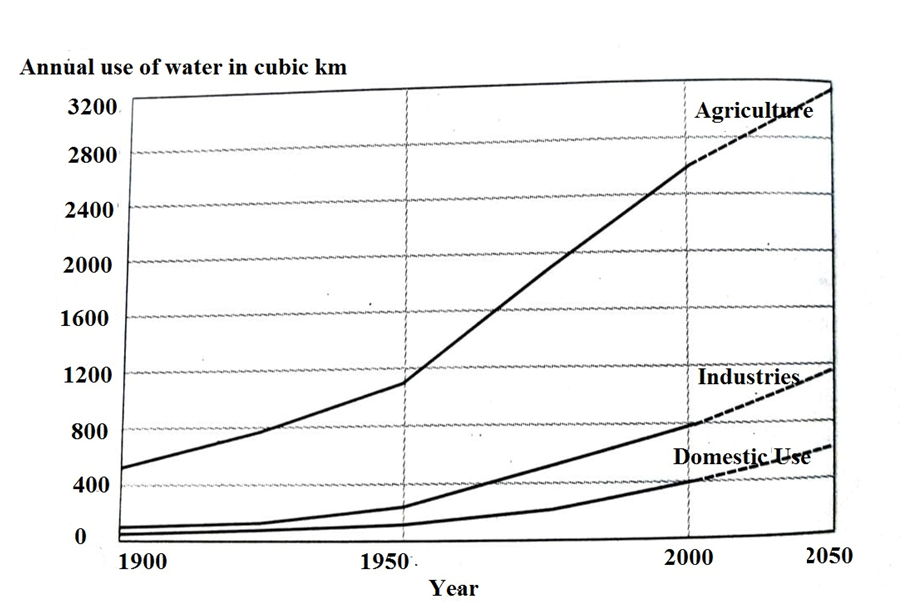
Figure 2: Use of water in various sectors
If the water demand has increased more than the population growth, what is the reason? It is true that in developed countries, people need a lot of extra water for watering their gardens, washing cars, etc. But overall, agriculture and industry use much more water than domestic uses. According to a 2000 estimate, 10% of global water is used for domestic purposes, 20 % for industry, and the remaining 70 % for agriculture including livestock (WRI, 2005). Between 1950 and 2000, annual agricultural water use increased nearly two and a half times (UNDP,2006).
One significant factor contributing to the rapid increase in water usage in agriculture is the expansion of irrigation and the cultivation of water-intensive crops, such as high-yielding rice. Since the Green Revolution, the farmers of Punjab no longer grow millet, they grow wheat and paddy. In developed countries, people’s daily diet is dominated by animal products. In other countries too, the demand for such food is increasing with development. How much water is used in agriculture and animal husbandry depends a lot on the type of demand. Experts do not expect this rate of growth to slow down by 2030. Table 2 calculates the amount of water used in the production of various products from agriculture and animal husbandry.
Table 2: Use of water in various agricultural and animal products
| Animal Products | Used water in liter/ Kg production | Agricultural Products | Used water in liter/ Kg production |
| Beef | 15,400 | Rice | 2,500 |
| Mutton /Lamb Meat | 8,300 | Soybean | 2,300 |
| Pork | 4,350 | Palm Oil | 2,000 |
| Chicken | 4,325 | Wheat | 1,800 |
| Egg | 3,300 | Citrus Fruit | 1,000 |
| Cheese | 5,300 | Corn | 1,200 |
| Milk | 1,030 | Potato | 290 |
3. Over Use of Water in the Industrial Sector:
The use of water in the industrial sector has increased four times from 1950 to 2000. There is high demand for water in industrialized countries, where industries consume 40% of the water. In developing countries, however, this figure is only 11% (WRI, 2005), but it is expected to increase soon to levels similar to those in the developed world. It is estimated that water demand in the industrial sector in India will increase four times by 2050 compared to the year 2000 (CGWB,2004).
Industry requires water for various purposes. In hydroelectric power stations, water rotates the turbine. Appliances need water to cool them down to prevent overheating. In fact, thermal power plants require so much water that it’s often more convenient to transport coal to a water source than to a coal mine. Every thermal power station of the Damodar Valley Corporation of India is located on the bank of some river. Water is also used in various industries for boilers, cooling, production logistics, solvent, washing, and garbage disposal. Among the industries that use the most water are power generation, the paper industry, food processing, metals, and mining (IIEP, 2007). An estimate of how much water is used by some of these industries is given in Table 3. This data is for developed countries. Some countries like China or India use five to seven times more water than that (WGEUCR, 1998).
Table 3: Use of water in different Industries
| Industrial Products | Used water in liter/ Kg production | Industrial Products | Used water in litre/ Kg production |
| Cotton Garments | 600-800 | Semi-conduct cheep | 56-546 |
| Petrochemical Products | 110-668 | Synthetic fertilizer | 124-187 |
| Paper/Paper Pulp | 50-70 | Lather product | 40-67 |
| Brick | 15-30 | Steel | 5-10 |
Attempts are made to recycle water used in industry. Not all water can be recycled; some have to be discharged as waste. That water often does not return to the environment in its original state. Its quality deteriorates, leading to pollution. Even water that is not directly used for industrial purposes in rivers, reservoirs, or underground near industrial centres often becomes unusable due to contact with waste from industries. It is difficult to calculate exactly how much water is being polluted by industry. However, if we keep this matter in mind, it should be understood that the industrial sector requires a significant amount of water.
4. Uneven Distribution of Water and Localised Demand
A major reason for water scarcity is the imbalance between widespread precipitation and high human demand concentrated in specific locations. Over time, people have settled near rivers or large reservoirs to meet the growing demand. As urban populations increase, along with the demand for industrial products and electricity, natural water sources are becoming insufficient in many areas. By collecting large amounts of water in one place, the natural flow of water is disrupted, leading to scarcity not only at the point of demand but also upstream of the river. Addressing one problem often creates new ones, disrupting the rhythm of nature. While it’s easy to disturb this rhythm, creating a new one is not an easy task.
Conclusion:
In conclusion, water scarcity is a complex and urgent issue that demands immediate attention and concerted action at local, national, and global levels. By implementing sustainable water management practices and fostering cooperation among stakeholders, we can work towards mitigating the effects of water scarcity and building a more resilient and water-secure future for generations to come.
 Geo-Synthesis